
The automotive marketplace industry is experiencing its most significant transformation in decades, and artificial intelligence is driving this change. At AutoBuzz 2025 in Berlin, one theme dominated every conversation: AI agents and their potential to reshape how we buy and sell vehicles.

The Clear Winner: AI Agents Take Center Stage
Among all the emerging technologies discussed at AutoBuzz 2025 Berlin, artificial intelligence and AI agents emerged as the overwhelming focal point. Nearly every speaker, panel discussion, and networking conversation circled back to a fundamental question: “Are you building an AI agent?”
This isn’t just industry hype—it represents a genuine shift in how automotive marketplaces are approaching customer engagement and operational efficiency. However, the path from AI curiosity to AI implementation is proving more challenging than many anticipated.
The Reality Check: From Prototype to Production
While enthusiasm for AI runs high throughout the industry, conference attendees quickly learned that building functional AI solutions is far more complex than it initially appears. The marketplace is flooded with prototyping tools that make it easy and enjoyable to experiment with AI concepts. These platforms allow companies to “tip their toe into the water” and explore possibilities without significant investment.
The real challenge emerges when moving from prototype to production. Creating a live AI service that understands the nuances of human communication, processes both structured data and qualitative information, and most importantly, doesn’t hallucinate or fabricate information, requires substantial time, expertise, and resources.
Data Quality: The Foundation of Success
The age-old principle of “garbage in, garbage out” has never been more relevant than in today’s AI-driven automotive marketplace. The quality of underlying data used to train AI agents directly determines the quality and reliability of the resulting service.
This reality creates both opportunities and challenges within the industry. Large, established players with access to vast amounts of proprietary data hold a significant advantage. Their extensive databases of vehicle information, customer interactions, and market trends provide rich training material for sophisticated AI systems.
However, smaller players and startups aren’t necessarily left behind. The availability of large language models (LLMs) has democratized access to AI capabilities that were previously unavailable to companies without massive data resources. While they may not have the proprietary data advantages of market leaders, these companies can leverage publicly available AI tools to compete in ways that weren’t possible before.
The Marketplace Evolution Opportunity
Rather than questioning whether marketplaces have reached their ceiling, AutoBuzz 2025 Berlin revealed how AI is creating unprecedented opportunities for marketplace innovation. The “winner takes it all” mentality is being replaced by a more nuanced understanding of how AI can enhance and strengthen the marketplace model.
Key opportunities emerging for forward-thinking marketplaces include:
Enhanced Marketplace Intelligence: AI agents are making marketplaces smarter, not obsolete. By integrating sophisticated AI capabilities, marketplaces can offer superior matching between buyers and sellers, provide intelligent recommendations, and create more personalized experiences than ever before.
The Evolving Dealership Partnership: Rather than replacing dealerships, AI-enhanced marketplaces are creating new opportunities for deeper partnerships. Marketplaces can serve as the intelligent front-end for discovery and initial engagement, while dealerships handle the final transaction and customer service elements where human touch remains valuable.
New Competition from Unexpected Directions
The most significant competitive threats aren’t coming from traditional automotive companies—they’re emerging from sideways entries into the market. Several new competitive dynamics are reshaping the landscape:
Google’s Vehicle Marketplace is leveraging its search dominance to capture vehicle shopping intent before users even reach traditional automotive sites. Google’s vehicle advertisements represent a significant shift in how consumers discover available inventory.
Generative Engine Optimization (GEO) is replacing traditional SEO strategies. Companies are now optimizing their content not just for search engines, but for AI systems that generate responses to user queries. This fundamental shift requires completely new approaches to digital marketing and content strategy.
Complete E-commerce Journey Providers are entering the market with end-to-end solutions that handle everything from vehicle research to purchase completion and even future vehicle sales. These companies bypass traditional marketplaces entirely by owning the entire customer relationship.
Mobility-as-a-Service Providers represent a longer-term shift in consumer behavior. While car-sharing and subscription services haven’t yet achieved massive market penetration, the underlying trend toward access over ownership continues to build momentum, particularly among younger consumers for whom car ownership is becoming less important.
AI’s Transformation of Marketplace Functionality
After years of incremental improvements, automotive marketplaces are experiencing their most significant evolution in over a decade. While the industry had reached a functional plateau where improvements focused primarily on mobile optimization and communication speed, AI is unlocking entirely new possibilities for marketplace innovation.
AI is enhancing marketplaces in several transformative ways:
Intelligent Search and Discovery: Modern AI agents can understand complex, natural language queries about vehicle preferences and provide sophisticated matching that goes far beyond traditional filter-based systems. This makes marketplaces more valuable to both buyers and sellers.
Smart Negotiation Support: Rather than replacing human interaction, AI can assist in negotiations by providing market insights, fair pricing recommendations, and communication facilitation. The prospect of AI sales assistants supporting both buyers and sellers creates opportunities for marketplaces to add even more value to transactions.
Next-Generation Optimization: Forward-thinking marketplaces are already adapting their platforms to work seamlessly with AI systems. By structuring data and content for both human users and AI agents, these platforms ensure they remain discoverable and valuable in an AI-driven ecosystem.
The Road Ahead for Marketplace Innovation
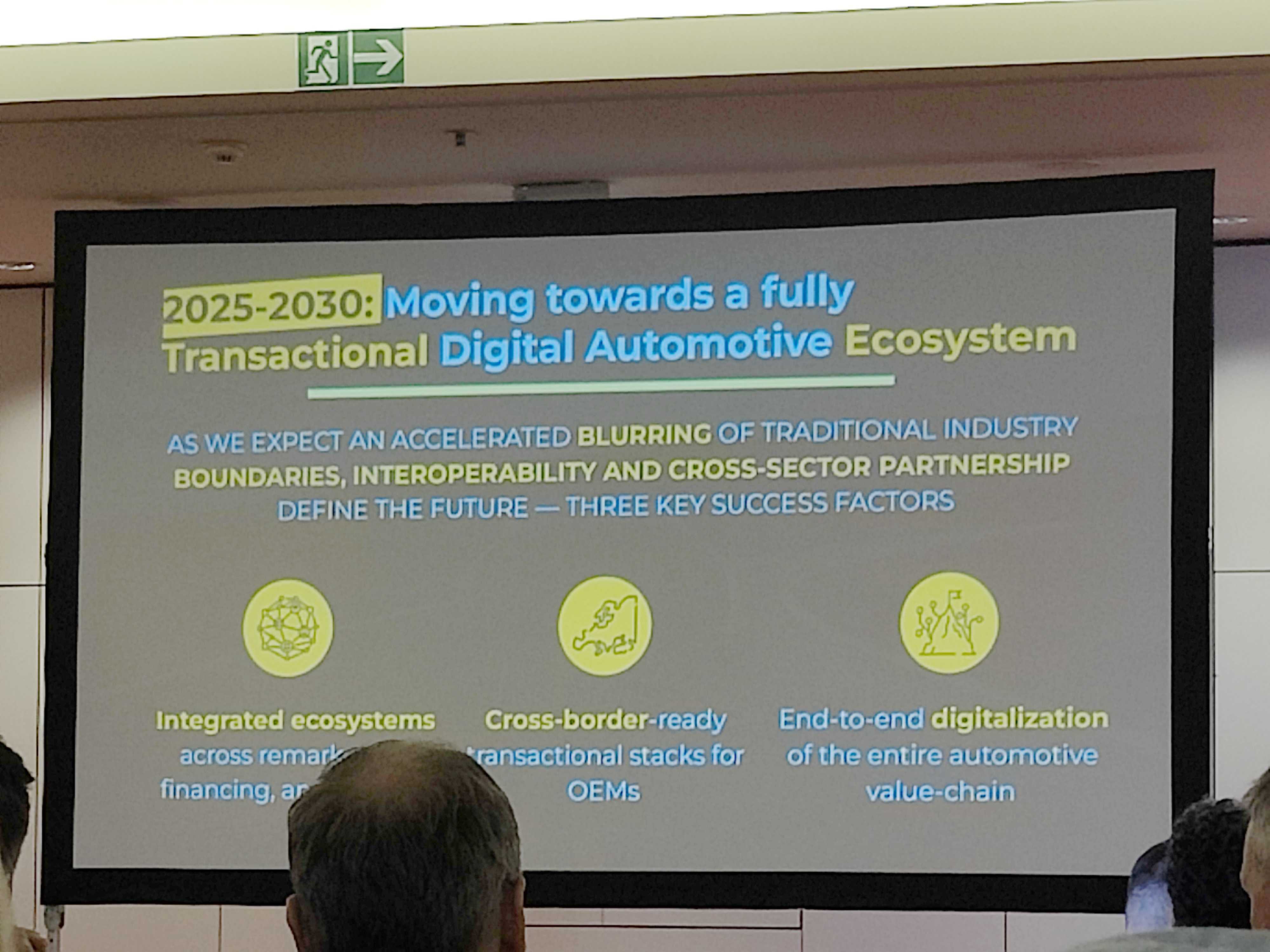 The automotive marketplace industry stands at an unprecedented opportunity. While AI agents represent tremendous potential for improving customer experience and operational efficiency, the most successful implementations will be those that enhance rather than replace the proven marketplace model.
Marketplaces that successfully integrate AI capabilities while maintaining their core value proposition—connecting buyers and sellers efficiently—will likely gain significant competitive advantages. The key is recognizing that AI is not a threat to marketplaces, but rather the next evolution of what makes them valuable.
The conversations at AutoBuzz 2025 Berlin made one thing clear: artificial intelligence isn’t replacing the automotive marketplace model—it’s supercharging it. Marketplaces that embrace AI as an enhancement tool, invest in smart integrations, and maintain focus on their fundamental value of connecting market participants will be best positioned to thrive in this new landscape.
The transformation is already underway, and the pace of change is accelerating. For automotive marketplace companies, the question isn’t whether to embrace AI, but how quickly and effectively they can implement it while maintaining the reliability and trust that customers expect in high-stakes vehicle transactions.